About Zach Gormley
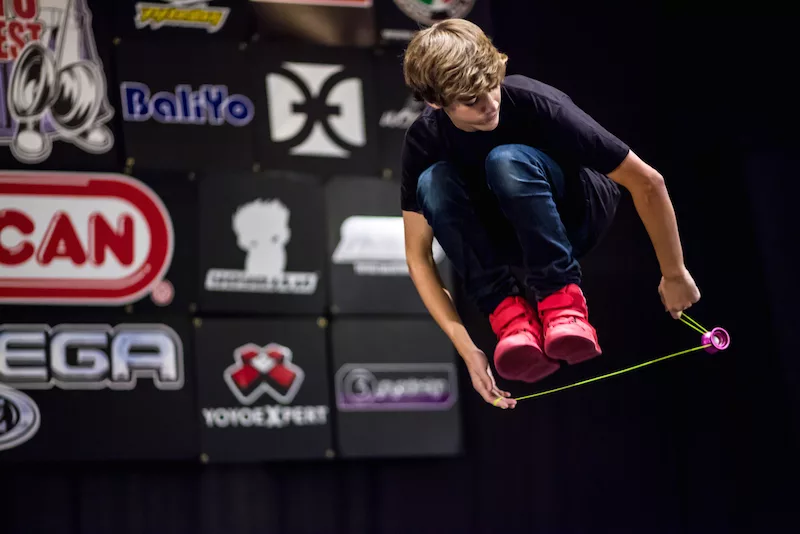
Zach Gormley is a professional yo-yo player from Fort Collins, Colorado, who has competed in the 1A (single string) division since his early teens. He was introduced to yo-yoing through a Yomega Brain received as a birthday party favor and developed his skills through online video study, progressing rapidly to national-level competition. In May 2009, when Gormley was approximately 13, CLYW (Caribou Lodge Yo-Yo Works) founder Chris Mikulin noticed his videos and offered him a sponsorship — a relationship that has continued for over 15 years.
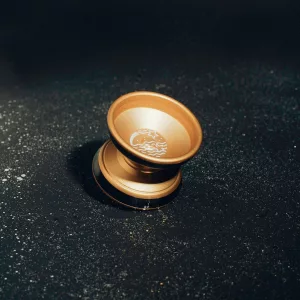
On the competition stage, Gormley became the US National 1A Champion in both 2012 and 2014 before reaching the peak of the sport at the 2015 World Yo-Yo Contest in Tokyo, where he defeated 527 competitors from 32 countries to claim the 1A World Championship by a seven-point margin. He prepared his routine over eight months under the coaching of 2008 World Champion John Ando, and competed using a prototype of his signature yo-yo, the Borealis — a collaborative design with CLYW built around his preference for a light, fast return top with long spin time.
Gormley is regarded within the community as one of the sport’s most original trick composers, known for exploring unconventional mounts and arm combinations that prioritize flow and logical progression. He co-founded Innovation Movement in 2012 with fellow player Isaac Sams as a vehicle for advancing trick theory and spotlighting players worldwide. His quote on trick-making — “The two biggest factors for making up good tricks is originality and trick composition” — is widely cited as representative of his approach. CLYW has developed seven signature return tops with him across his career, most recently the bi-metal Wish (2020).
As of 2024, Gormley remains active in competition, placing at Rocky Mountain Regionals and appearing as one of 14 invited players at the inaugural Faye Webster YoYo Invitational in Berkeley, California.
In Their Own Words
Q: Tell us about trick composition. What makes a good trick?
The two biggest factors for making up good tricks is originality and trick composition. I really enjoy coming up with tricks that flow together and seem logical. I also tend to gravitate toward tricks with arm motion that look cool. (YoYoNews, 2012)
Q: How many times did you practice your 2015 World routine before winning?
I must have practiced it over 400 times. I spent eight months developing that routine with John Ando’s coaching, and when I finally performed it at Worlds in Tokyo, I was living in the moment, and happy that all of the hard work finally paid off. (BYU Daily Universe, 2015)