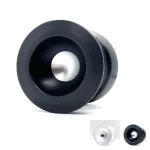
Smooth, creamy and fun. Say hello to the Butterball.
SPECS Diameter 54.4mm Width 46.5mm Weight 64.4g Material 6061 al
The Butterball was designed, engineered, and tuned for pure fun.
Late last year, we looked into a repeat run of the Abel – a derivative of the Noah, one of our best selling organics to date. The Abel was a small-batch variant of the Noah that came without Side Effects, for those who wanted a simpler, more straightforward version that captured all of the Noah’s magic without the modularity or tinkering required. The Abel never got the time of day like the Noah did, even though it was lauded for its featherweight, sensitive play. We went through two great runs of the Abel, and then moved on to other projects.
working on a possible third run of the Abel gave us a chance to make minor quality of life changes, on top of new colorways and the usual works – but one thing led to another, and getting carried away in long hours at the CAD desk, we emerged from design sessions with something quite different. the butterball is the result of an incredibly fine focus on designing for feel.
Ever since the Tide, we’ve been thinking a lot about organic design, and the Butterball might be the most actualised version of all of those thoughts currently.
The most immediate departure from the Noah / Abel form factor is the removal of the schmoove-step – a feature that’s been found in every organic model we’ve designed, right since our first design in the Cloudberry, and most recently in the Tide. The schmoove-step brought multiple functional benefits to organic designs that typically lack stability and power; it allows designs like the Cloudberry, Thunderberry, and Stormberry to be surprisingly performant for their category without having to adopt extreme or awkward distributions of weight, and we’ve always liked our designs wide. Quite fairly, though, the schmoove-step departs from a purely traditional organic profile.
The Butterball takes from the Noah’s round, bubbly silhouette, and draws from our usual design features – such as a simple, unbroken curvature across nearly the entire design.
In terms of playfeel, we were hoping to merge the best characteristics of the Noah, Goji, Pomelo, and Cloudberry. It needed to feel like a fat, bouncy cloud on string, be well-paced and tuned in rhythmic play, and zip and dash when you wanted.
The distribution of mass here is different as well – there’s quite a bit more weight in the center and mid-zones. The magic happens usually where you don’t see it. While the Abel was incredibly lightweight and sensitive in play, the Butterball feels significantly more sure, and glides through tricks smoothly. The Butterball doesn’t feel flighty, in that sense – but still preserves great agility in directional-change play. Save for players who very specifically treasure an ultralight playfeel, the Butterball is – in our view – a significant upgrade to the Noah and Abel.
The Butterball comes in at 54.4mm in diameter, and 46.5mm in width, giving it a nice, fat, and comfortable profile. It clocks 64.4g in mass, so it feels light, but not sparse.
As its name suggests, the Butterball is just endlessly smooth.
The Butterball wasn’t made for competition or the modern meta; it’s not that kind of yoyo. But if you’ve enjoyed our takes on the organic genre, we have a feeling you’ll enjoy the Butterball too.
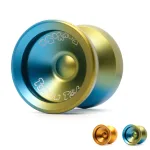
Say hello to the Solaris – the aluminum reimagination of our flagship titanium model, the Polaris.
SPECS Diameter 55.1mm Width 48.9mm Weight 66.8g Material 6061 al
In January, we released the Polaris – a new flagship titanium model that was designed to optimize for fluid power, a specific type of playfeel that combines agility and smooth motion, with enough stability and power for any modern trickset. In other words, a model that had everything on spin power and stability that you could want, but was still amenable to a player’s touch and control.
The result of the Polaris was a model that had a very, very comfortable heft – and as subjective and controversial as the term is, the Polaris plays somewhat floaty despite its weight. The Polaris quickly became an internal favorite – and while there’s some obvious and natural bias there, if we had to restart our entire Weatherman Design Line from scratch, the one model we’d keep as our brand cornerstone would actually be the Polaris.
By virtue of the experimental nature of the Weatherman Line, many of the designs that sit under that umbrella naturally fit the category of one-and-dones – the Khuno is a perfect example of that. It was a valuable proof of concept as the world’s first Side Effects-enabled bimetal – as a case study in weight distribution, it showed modular adjustment of mass could yield interesting and educational results for those that tinker. But beyond that, we were unconvinced that the model needed to live on in a sustained way.
Quite conversely, the Polaris does not sit within that category. After the Polaris was released to the general public, the conversation quickly evolved into reimagining its essential features into an aluminum counterpart that could exist as a mainstay in our design lineup – an accessible, simplified design that best represented Atmos’ design ethos and philosophies – perhaps what the newly released Butterball has been to our body of work in the organic space.
We set off to work, using the Polaris as our keystone, and sketched out a draft of our first prototype. The most immediate physical changes are a +0.9mm increase in width, a +0.2mm increase in diameter, and a reduction of mass by 0.7g. The thought here was to decrease overall mass while redistributing the balance across a larger form factor, which would lead to lighter, more powerful play. Something really valuable we’ve learned by working on projects such as the Ekta, Cloudberry and Polaris is using diameter and width adjustments as an effective substitute for mass – and by consequence, how to make heavier yoyos play a lot lighter than their numbers would suggest.
The Ekta sits at 67.3g on paper, but it feels more like a 65-66g design in play; the same could be said of the Polaris. The gap between measured specification and a player’s experience is the space we have enjoying operating in, and is where a lot of the magic happens.
The first prototype we made turned out to be about 75% of what we were hoping and expecting it to be. The Solaris felt nice, full and comfortable in the hand, and the subtle cuts and minimalist lines came out really nicely. It doesn’t feel indulgently large – the 48.9mm in width feels very natural and proportionate to its form factor.
Playwise, however, it felt slightly lacking – even in conversations with the team, it was difficult to really put a finger on what was missing. It’s in moments like this that we hard work to find the vocabulary for experience – and it was particularly difficult to do here. It had a certain hollowness to its play, and just felt very middle of the road. For many of its good traits – such as power and stability – it lacked the same fullness in playfeel that was embodied by the Polaris.
When it comes to prototypes like these, that sit in the 75%-90% zone of completeness, the most essential tweaks are almost always under-the-hood. They don’t lie in diameter and width adjustments – what helps the most is a light touch.
We went into our CAD archives and pulled out various blueprints, and studied alterations in weight distribution we’ve made through quite nearly a hundred prototyping rounds in the past – and finally zoned in on a specific fix via mass redistribution, while keeping overall mass unchanged. We also threw in a few more quality-of-life adjustments, such as rounding off the angle close to the response step, which ensures a smoother play experience, and softened a few lines across the silhouette of the body.
With the Solaris, you feel its weight on initial throw – but once it gets into motion, it feels a lot more like a 64-65g design – it runs across your string with ease.
This is entirely subjective, of course, but beyond the Polaris as a design reference – we personally feel the Solaris shares some qualities with the Cloudberry. It has a fullness about it – it doesn’t feel overly airy or frail – it has some genuine punch. It’s powerful and spins for days, and you really feel this when it returns to hand… We’re always surprised by how much spin there is left even after a longer, technical trick.
It takes after the Polaris in playfeel entirely. It’s a stretch to say it plays light, but it has a really easy and amenable cadence and rhythm. While it has all the technical capability you could ask for, we suspect this might most appeal to rhythmic, flow-centric playstyles.
The name Solaris pays homage not only to Polaris, which is its design forebear, but also the Weatherman Line. It etymologically references the sun – a large, floating body of great gravity – and keeps with our tradition of using natural terminology under the Weatherman umbrella. On a lighter note, we’ll eventually run out of names that have “ari” embedded in them – but today is not that day.
The Solaris is part of our effort at Atmos Projects to develop simplified, minimalist flagships in our design lines. The first of that initiative is the Butterball – which was released a few months ago, and is likely the best received organic we’ve released – and we’ve put forth quite a number.
The Solaris serves that same purpose for our W-shaped models, and we can’t wait to hear what you think.
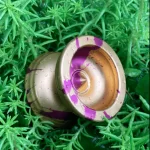
We’re proud to announce the final release of 2024, and the first of our Artist Edition line – the Noma., an ultralight organic designed for featherweight, floaty fun.
SPECS Diameter 52.6mm Width 46.1mm Weight 59.5g Material 7068 al
In October 2023, an idea surfaced in the Atmos group chat about the possibility of working with players and designers in co-creating designs that embodied a unique player or design philosophy – an Artist Edition, of sorts – similar to how some Japanese clothing brands work with artists in developing signature capsules and releases. Multiple exciting names and brands came up in that conversation, but the consensus revolved the most emphatically around Tsukasa Takatsu.
If you don’t know already, Tsukasa Takatsu is a legendary player hailing from Japan, the father of the #thingsthatrepeat trick movement, and is known for his effortlessly creative and intelligent repeater-style tricks that have inspired an entire genre of play. It’s difficult to overstate his impact on modern yoyo culture. Tsukasa is also a tenured member of the One Drop player team, and has produced two signature yoyos with them – the incredibly popular and successful Panorama and Diorama.
We reached out to Tsukasa – and we were incredibly glad that Tsukasa was as excited to do something together as we were. One Drop also very graciously gave their blessings on this project, which we were incredibly grateful for.
The conversation went quickly towards developing a design concept that would anchor the project. Tsukasa has long enjoyed our organic designs – especially the Noah, Abel and Cephas, and asked to base his design off the Noah, mostly – but melding it with inspirations from a long list of his other favourite yoyos, such as the Wooly Marmot by Caribou Lodge, the 2007 888 by Yoyofactory, the Fern by A-RT, and the Hitman Pro by YoyoJam. We began with an initial specifications ballpark of 50mm-diameter, 42mm-width, and 60g-mass. Tsukasa also requested that the design be Side Effects-compatible – and to be shipped with Aluminum Ultra Lights, his favourite type of SEs.
Our initial reaction to these specs were that this design was turning out to be a lot smaller and lighter than we’ve ever been comfortable with. Our smallest design at that point was the Goji, which came in at 52.5mm, and we had never gone lighter than 61.3g (the Pomelo). For the past few years, we had also been trending towards heavier designs, transitioning away from the ultralight, floaty organic design mold that had been the essence of our early years. At the same time, this felt like the most natural request. The Panorama and Diorama were surprisingly slight and light in play – a perfect match for Tsukasa’s gentle, incredibly controlled style. And for us, it was going back to something incredibly familiar.
We drafted up a first prototype that was north of 52mm in diameter, 46mm in width, and 60.5g in its lightest form. For the most part, we were able to translate the Noah’s weight distribution to the prototype, all while scaling down its size. To begin with, the Noah is an evenly-weighted design – with most of its mass spread out in the center-and-midweight sections. To reduce width overall, we asked Tsukasa if he would prefer us remove the Schmoove-step that is a characteristic feature of the Noah, and go with a wall design more akin to the Butterball – but Tsukasa insisted it remained. These prototypes were sent promptly to Tsukasa for testing. His feedback was that they had “great impressive feel, and very comfortable”, but also felt still “a little heavy”, by about 1-2g. The spin power was also a little “too strong”, and asked if it could be “powered down”. Tsukasa felt the weight distribution and dimensional proportions were perfect, but wanted something scaled down slightly – in other words, to keep its balance and feel, but go even lighter and gentler.
This feedback was perfect. It’s always incredibly helpful when a player’s tastes are refined and genuinely opinionated – it provides so much clarity of where to go. The further we iterated and heard feedback from Tsukasa, the more clear it became where this design was headed.
During the design process, a comparison to ultralight fishing surfaced, and feels fitting here to describe light play – it’s one thing to go big game hunting, where heavy-duty, high-poundage gear, adrenaline, and physical strength and skill are the focus. Ultralight fishing feels entirely different – the experience is focussed on finesse and precision, technique, and the fact you feel everything – every single turn and twist.
The second prototype was nearly 2g lighter overall, and was designed to have a little less rotational force than its first version. We kept the diameter at 52.6mm to preserve its dimensional proportions, and 7068-AL was also used to make core design parameters achievable. The Schmoove-step was preserved, but slightly altered for smoothness and ease in play. The outcome of these changes were that the prototype played like a baby-sized Noah with its lightness and sensitivity dials turned all the way up. It played floaty, ultralight, and gentle – like a natural extension of the string.
It feels like a little cloud on a string.
If you’ve ever had the chance to throw a Panorama or Diorama, you would feel Tsukasa’s tastes and preferences similarly imbued in this one – which, to us, is a perfect reflection of the Artist Edition line, which sole purpose is to spotlight a specific player’s signature feel and play.
The design changes landed perfectly with Tsukasa – he was extremely pleased with the way it played, preferred it heavily over the first prototype, and felt it perfectly fit what he had in mind.
That was all we needed to hear.
Here’s Tsukasa playing a Noma. – if you’ve not read anything up to this point, take three minutes to watch this goodness.
Noma. (々) is a symbol that linguistically functions in Kanji as a repeater – and comes from a simplified form of the character 仝, a version of “same” – which is a perfect homage to Tsukasa’s playstyle, philosophy, and legacy.
The Noma. is not built for the speed player with high-click aspirations, but the type that finds joy in subtlety, finesse, and fine control.
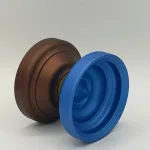
We’re proud to introduce the second instalment of our Monogram Line, the Hamr — our signature model for Vladimir Glazkov.
Precision-crafted from titanium, the Hamr is fast, floaty, and technical.
SPECS
Diameter 52.0mm Width 46.0mm Weight 66.7g Material Titanium
Vladimir Glazkov joined Atmos Projects in December 2023, and his addition to the team was something we were extremely excited for a myriad of reasons. It’s no hyperbole to say Vladimir falls into the rare category of players that qualify as “your favourite player’s favourite player”, and he remains a fixture in the global yoyo scene.
He has an encyclopaedic knowledge of yoyo design and culture, and his playstyle infuses technical complexity with a real artistic flow and elegance. Watching him throw is always a good time. Shortly after coming on board to the team, it naturally followed that we’d work together on a design that was an expression of his tastes and gifts, and also perfectly fit his playstyle.
If you’re new to this space, the Monogram Line serves as a home to signature designs for Team Atmos players — a canvas for the full expression of their style, tastes, and philosophy.
Fittingly, early discussions about Vladimir’s signature model surrounded the influences that have formed Vladimir as a player, as well as specific design traits that he favoured. Vladimir brought up Yuuki Spencer as an early and major influence, describing him as the “quintessence of style and technicality”. Yuuki’s 2009 US National Championship was raised as a performance that “changed my developmental vector… in learning how to freestyle and play in synergy with music”.
The yoyo used in that iconic freestyle was a Yoyofactory Genesis — signature model of Miguel Correa, a 5A legend — which Vladimir later himself used in his first stage performance in 2009, a prelude to a career that featured winning the Russian National Championship.
Vladimir placed two other models on the drawing board — the Polaris and the Aria, which Vladimir felt were designs that exhibited the force and stability that he prized in play. Concept-wise, Vladimir pitched a design that was “soft and suitable for high-speed play, as well as technical tricks” — and asked to combine the aggressive, H-shaped silhouette of the Genesis with the playfeel aspects of the Polaris and Aria.
The final piece of the concept was a design prompt from Vladimir that matches his personal philosophy — “for regular use, for any purpose” — a call to utilitarianism as the driving ethos for the design, and an everydayness that did away with the preciousness that sometimes surrounds titanium models.
We sketched up early drafts of the Hamr — a process Vladimir was incredibly involved in. The first prototype had the general specifications of 55cm diameter, 47cm width, and 66.4g weight. The profile of the Hamr was a reinterpretation of the Genesis’ iconic H-shape — which went on to inspire a generation of other designs — fused with the rim and hub design of the Polaris.
The goal was to machine a prototype that felt as a capable as the Aria in play, but with the soft, comfortable feel in motion that has come to characterise the Polaris.
After weeks of tinkering on the design, and going back on forth on the smallest of details, we got Prototype I machined. Our first thoughts were that it felt more stable and powerful but somehow more agile and fluid than the Polaris. It glided in motion and felt nimble and quick, while maintaining great stability. After weeks of testing, Vladimir wrote in with his feedback,
Despite checking multiple boxes, we ultimately decided to work on a second prototype that leaned harder into design traits that Vladimir felt strongly for — for one, he felt Prototype I was too large in hand, and desired a smaller physical footprint; also, while retaining the fluidity and softness, Vladimr wanted the Hamr to have even more power and stability. Some of the designs that were surfaced as references were the YoyoRecreation Chopsticks Gorilla, SYFO, and DIS Anima — all of which combined great performance with fun, and were designs that Vladimir found inspiring.
After weeks of design discussions, we settled on a Prototype II that would feature a 52mm diameter, 46mm width, and an increased mass of 66.7g.
The adjustments altered the proportions of the Hamr into something relatively wider — a frame that would be nimbler, but also more stable. Prototype II featured significantly beefier rims than the original to increase power and stability, as well as a reinforced midweight distribution for the consolidated, full feeling that characterises our titanium models.
Prototype II had the perfect size and footprint for Vladimir, and came incredibly close to perfect. We made a few final tweaks to weight distribution, and the third prototype (that eventually made it to production) achieved that elusive balance of float, power, performance and fun.
The Hamr was also put through the most intense and brutal stress test we’ve ever seen.
The Hamr is a unique departure from the usual Atmos design playbook — it’s our very first H-shape, and is entirely distinct from everything we’ve put out so far. It’s fast, floaty, and technical, and represents Vladimir’s style, preferences, and philosophies.
Diameter 55.1mm Width 46.0mm Weight 66.0g Material Delrin & Polycarbonate
The Smoke came out of a meeting of practical and philosophical concerns related to my tendency to play yo-yo for the feeling of it over a predetermined result. I tend toward play without a plan and wanted my signature model to embrace its status as a toy and support a free-flow, feeling-based style of play.
A practical intention we decided on early was to design a delrin signature model that owns its status as being “just a toy.” I have always prioritized carrying yo-yos that look welcoming over intimidating. I prefer a friendlier shape. This, paired with my prioritization of how a trick feels more than its technicality led to this classically comfortable design — with mileage to handle both long and short string-length trick structures and both slow and fast play.
Smoke reacts to some movement with resistance and other movement with leniency. Hops and redirects are rounded out by the heavier mass of the yo-yo. But, similar to Tyler Vienneau’s Yokel, the Smoke is pliant when string is pulled in opposing directions, keeping the player on their toes and holding them to a certain level of accountability.
These dynamics were accentuated by narrowing the width of the yo-yo and adding Cephas-inspired flush polycarbonate caps. Inspired by the elegance of the Snowberry and Crucial Delrin models, I wanted a heavier delrin body to round-off rigid play, while also reminding myself to follow what the yo-yo itself is doing.
Smoke was designed to support an approach to play I have been developing for a few years, inspired by my favorite poet, William Stafford. Smoke as a physical phenomena has a thick presence but also an unpredictable levity and freedom to it. William Stafford once described his poetry writing process as being likened to “smoke’s way”, which always finds an opening, a way out.
When I play yo-yo, I also find the yo-yo, like words in a poem, presents its own momentum and direction. When I’m receptive the yo-yo leads the dance, meandering through the string, eventually finding it’s way out of a sequence. Even if the sequence has been done a million times, the execution always can change. Often the trick begins and ends not by my intent but by some unpredictable sense of pull the yo-yo and string suggest. Smoke facilitates play without agenda, and I am thrilled to get this yo-yo into people’s hands.
The Smoke was first designed in May 2023, and went through four prototypes before we landed on what we felt was perfect. While the Smoke is intentionally designed to be as minimal as possible, there are about a dozen under-the-hood design innovations (adapted from previous projects such as the Snowberry and Arctica) that are hidden from the eye, but help it perform as smoothly as it does.
Smokes will be available in White, Black, White/Black, and Black/Clear.