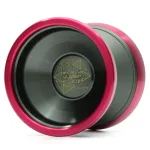
Fuji

The following is archived from Atmos’ website:


We’re very excited to present the Fuji, a pocket rocket that’s smooth, fluid and a perfect everyday companion.

It’s part of a three-model series, that serves as our love letter to Japanese culture and design philosophy.

SPECS

Diameter 52.7mm
Width 45.9mm
Weight 66.5g
Material 7068 AL & SS

Over the past five years of our existence, Japanese design philosophy has been a core pillar of inspiration and reference of what we do at Atmos Projects. In the early 2010s, before Atmos’ inception, we spent a significant amount of time in the suburbs of Kyoto. This season of life was extremely immersive, and sparked a young and early passion for design and making. Our time there gave us a vision and appreciation for design that is subtle and restrained, highly attentive to form, and yet joyous and relentlessly practical in the way they take shape in the world. This extended to an appreciation for fabrics and materials, even in other spheres such as pottery, construction, and architecture. Our experience did not give us an aesthetic to emulate, but rather convictions and values that resonated deeply with our own process of making.

In fewer words, our approach to design and making has been centred around an obsessive care surrounding the form of an object (teinei / 丁寧), minimalism and restraint (shibumi / 渋い and kanso / 簡素), everyday-ness (yo no bi / 用の美), and joy (tanoshisa / 楽しさ). The Fuji and the other two unreleased designs were designed to represent all of that.

We started on the Fuji design project in 2022, and made a first round of prototypes in 2023. It originally began as a Side Effects-enabled bimetal, and went through two iterations without the SE system. These were bimetal designs made with brass rims for maximum rim weight, with the hope it would push boundaries in terms of technical performance — our focus at the time.

Images of these prototypes have surfaced on the Internet, and Fuji prototypes have also been in circulation after we gave them away through our membership, SPHERE. Unfortunately, the initial prototypes didn’t meet the mark, conceptually, or technically. It didn’t capture the essence of Fuji that we hoped for, despite early promising feedback. Despite being far into development, the Fuji was benched for some time. We were clear we needed fresh insight and new inspiration to take the design where it needed to go.

Then, in 2025, we launched System_Refresh° on SPHERE — an internal design initiative to look at old designs or previously shelved projects, and the Fuji was top of the list of design projects that quite obviously deserved a fresh look.

We departed from the old approach of a heavier, thinner and more aggressive design to something smaller and wider — the current Fuji proportions are relaxed and comfortable, from an ergonomic perspective. Instead of pushing hard for a maximalist, performance-oriented design, our refreshed approach was to create something easy, comfortable, and appropriate for the everyday.

The walls take reference from the topological lines of the Weatherman profile, but the cup is a simple and minimalist arc that hides a weight distribution tuned for power. The understated exterior hides an oversized capability — the very restraint in design we previously referenced. To that end, we refrained from unnecessary angles and lines, keeping the form as clean as possible. Some designs shout, but we wanted the Fuji to exist quietly, and assuredly in what it was made to be.

The Fuji’s playfeel was where we wanted to most establish its essence of yo no bi / 用の美 — or, in the way we understand it, it’s everydayness. We wanted it pocketable, easy to toss in your bag and to bring around without second thought — but still retained a surprising seriousness in its performance. It had to be capable and fun, yet not fatiguing. Bimetals can sometimes feel either heavy and muddy, or conversely thin and sparse, depending on the design approach taken by its makers.

The Fuji leans towards a grounded, smooth and fluid feel. Its thick stainless steel rims give it sufficient power at its smaller size, but its intentional weight distribution mechanics preserve its fluidness in motion so it neither feels plodding and clumsy, nor sparse and thin.

It handles softly and gently, and gives you all the control you want and need.

The Fuji was built as a representation of our design philosophies and approach, which has evolved and been refined over the past half decade. There’s an obvious evolution if you trace our early work to what we do today — but there is also a clear line of what is worthy, unique and joyous design that runs across our body of work.

Lamina

The following is archived from Atmos’ website:


The Lamina is the first release in our new Research and Design lineup.

It’s smooth, wide and floaty — but beneath all the fun, the Lamina was crafted as an experimental design study in weight distribution and playfeel.

It comes in two variants: α and β, identical in shape, size, and material — except for its center weight, illuminating how small shifts in mass can transform feel.

SPECS

Diameter 51.9mm
Width 52.9mm
Weight [α] 66.8g and [β] 65.5g (Δ = 1.3g center weight)
Material 6061 AL

The Lamina was inspired by countless conversations around design theory and how small physical changes can lead to tangible shifts in playfeel. The community is full of these. The most iconic of them centers on the word “floaty” — a term that’s notoriously hard to pin down, not just in how a yoyo plays, but in what physical features might actually produce that sensation.

Designers and manufacturers we admire have chimed in from opposite sides of the aisle — and to us, the absence of conclusive agreement only makes the discourse more compelling.

It’s not straightforward to define playfeel, either. A player’s experience of a design is so subjective that it’s hard to map that objectively onto another person’s expectations. Specifications are also imperfect descriptors here — a 67g model could very reasonably feel like a 64g yoyo. 65g models can feel more reluctant than heavier alternatives. We’ve heard this countless times over our years spent in design and manufacturing.

Over that time, we’ve come to see playfeel more like tasting notes than a spec sheet, where many subjective descriptors (”reluctant”, “zippy”, “agile”, “hang time”) can help to paint an impressionistic picture of an experience. In many of the Design Notes that we’ve published in the past, we’ve tried to bridge that gap — to provide vocabulary of what a design might feel in your hands.

But without some shared baseline — both in language and in experience — it’s hard to map design variables directly to playfeel.

The Lamina was created to address that. Designed intentionally with two variants — α and β — it allows players to feel the difference that a subtle shift in centerweight can make, side by side. It’s also the first release under our Research and Design lineup — a space for experimental, potentially one-off projects and design exploration. As Coleman put it, this is us leaning fully into the “projects” part of Atmos Projects.

Rim weight is a lot more straightforward, and more easily understood — higher rim weight generally results in a sturdier, more powerful presence and spin. Center weight and mid weight, however, requires a much subtler view. From a “minmax design” perspective, centerweight is generally seen as purposeless — even subtractive — and does not help performance in any way.

Our personal stance is that weight distribution is a lot more nuanced than that, and that playfeel comes about by how the three mass categories harmonize with a design’s profile and size — each of these being vital levers for adjusting and creating a specific playfeel.

In musical terms — center weight can often feel like the missing bassline that makes an already wonderful acoustic set feel complete and whole. It’s not loud, but it has an incredibly grounding effect. When it’s missing, the musical experience feels somewhat empty.

We approached the Lamina like a controlled experiment, an A/B test — we fixed all design variables across the Alpha and Beta — except for center weight, where the Alphas pack an additional 1.3g in a slight dome hub. This additional mass is slight, but not insignificant — it isolates the effect of center weight as a sole variable, and allows us to observe its influence on feel.

The Lamina is wide enough for this subtle difference to feel real and observable, while keeping it stable in play.

The goal of this project isn’t to say that a specific design or playfeel is better than the other, but to provide a reference point for their own tastes and preferences. The Lamina exists to help players understand what playfeel speaks to them, and how to recognize it when it appears.

Our personal, subjective observations of the differences are as such:

“α / Alpha — Domed hub, with an 1.3g of additional center weight overall. Plays more rounded, bouncy and whole. A lot more gradual and smooth on directional changes.

β / Beta — Flat hub, base weight, and rim weight is proportionately more. Plays clean, light and agile. Very quick and amenable.”

For what it’s worth, A/B test and design theory aside — the Lamina is possibly one of the most fun designs we’ve made.

The name Lamina is Latin for layer — reflecting the tiered nature of design in a physical world. The suffixes, Alpha and Beta, draw from the Greek tradition of empirical observation.

We’re excited to hear if your experiences of the Lamina align with ours, and whether experiencing both versions together surfaces any realizations about existing models and designs.

The Lamina comes with a velvet texture blast. Bearing areas are masked and smooth, and will not affect string wear. Please note before purchase.

Polyberry

The following is archived from Atmos’ website:


The Polyberry is a modernised, polycarbonate remake of the Snowberry — a perfect blend of float and fun, while having enough juice to power through any trickset.

SPECS

Diameter 58.4mm
Width 50.3mm
Weight 68.5g
Material Polycarbonate

The Polyberry began with a desire to bring back the Snowberry, but in an improved, modernised way.

The Snowberry was our first ever plastic design, which we released in October 2022. At the time, the Snowberry was our homage to plastic yoyos — a genre that we grew up around, having come into the scene in the early 2000s. The Snowberry knocked our expectations out of the park and has been a staple in our lineup ever since. We have projects that exist best as one-and-done small batches, and then there are designs that deserve a permanent, evergreen spot in the rotation.

Our first plastic Berry definitely fit the mold of the latter, and we’re excited that the Polyberry will take its place today. The Snowberry also sparked a love in us for working with machined plastic. We were so taken by Delrin as a material, and that delight was deepened when we worked with polycarbonate on the Arctica, which later inspired our work on the Canopy PC. Earlier this year, we released Coleman’s signature in the Smoke, which combined both Delrin and polycarbonate in one of our most true, unique and honest designs. Working with these materials has just been such a joy.

We’re exactly three years from releasing the Snowberry, and the Polyberry exists today as our fifth plastic release. The Polyberry doesn’t just reflect much of our experience, learnings and familiarity with the material, but also our evolving personal philosophy with organic design, material choice, and objects of play.

The most immediate aspect of machined polycarbonate is its look and feel. Frosted plastic has a timeless, understated aesthetic — at the same time, it’s an incredibly versatile material. It’s soft enough in the hand and in play, but rigid enough that it yields excellent and predictable results from a manufacturing perspective. This unique balance allows the design process immense flexibility and creativity — working with it often feels like an inviting canvas for experimentation and play.

The capability of plastic designs have also vastly improved over the years. You still wouldn’t opt to compete with one, but when it comes to casual performance, modern plastics have seriously started to punch way above their weight.

A quick note on materials that bears mentioning — polycarbonate designs tend to sound a lot bigger than they actually are. Polycarbonate is roughly 44% the density of 6061 aluminum, so given the relationship between mass, diameter, density and overall spin power, the usual physical measurements can look and feel inflated.

TThe Polyberry is 58.4mm in diameter, 50.3mm in width, and 68.5g in mass, but contrary to what the numbers could imply, it doesn’t play overweight, or clumsy in the least. The Polyberry is one of the most floaty and agile and controlled yoyos we’ve designed — likely even more so than its predecessor.

This is subjective, of course, but the “real feel” of the yoyo is a lot closer to a 64g monometal design, if that comparison makes sense.

How the Polyberry most obviously departs from the Snowberry is the removal of the schmoove step and a vastly thickened rim. These structural changes allowed us to apportion mass more strategically — when the Polyberry gets up to speed, it’s significantly more stable than the Snowberry.

If you’ve tried any of our organics, the playfeel of the Polyberry will feel very familiar. It excels in flow, motion-focused play, and directional shifts. It handles pace and momentum well, feels very controlled, and has a wonderful “hang time” in the air.


It has to be said — the ergonomics are wonderfully friendly, too. The Polyberry sports a very round and bubbly silhouette. It’s extremely friendly in the hand, and is exceedingly soft on the catch.

We’ve used this comparison before, but it feels like catching a baseball with an old, seasoned glove.

We designed the Polyberry as a successor to the Snowberry — and for it exist in our lineup as a casual player’s rotation favourite. It’s the one you bring along for long roadtrips, the one that feels right to bust out on the Subway on the way home, the one you pick up on a late night jam. It’s the one you accidentally nail bangers on, it’s the one you drop a thousand times, the one you gift an old friend at the local meetup.

The polyberry is fun, smooth and light. It’s deceptively capable, and doesn’t take itself too seriously.

We hope you enjoy this one.

Cloudberry OS

The following is archived from Atmos’ website:


Say hello to the Cloudberry OS.

A full remaster of the design that started it all, the Cloudberry OS distills five years of organic design into a floatier, punchier, and more agile frame.

SPECS

Diameter 53.2mm
Width 48.9mm
Weight 65.8g
Material 6061 Aluminium

This design takes us back to the start.

The Cloudberry was Atmos Projects’ first ever design. We began in the Summer of 2020, and our pilot model was the Cloudberry — our first step into design, and the first physical object we put out into the world.

The goal was simple — create an organic design that we would personally fall in love with. 2020 was when organics were at their peak of popularity, and the field was flooded with iconic designs that still remain excellent representations of the organic ethos today. As a product of our times, we felt deeply and personally drawn to the artistic, non-meta, non-competitive, experienced-focused principles of the organic genre. Our personal favorites at the time were designs from Static Co., A-RT, and One Drop, and having these in our diet of play experience gave us an extremely rich foundation of what organics could feel and play like.

The original Cloudberry prototype, 2020.

Yet, we wanted to put something slightly different out into the world — a design that would have the fullness of the organic experience, but yet be uncompromising in performance. Form followed function, and the design we worked on for months featured a drastic schmoove-step ring, deceptively thick rims, and a relatively big frame. The result of those physical features was an organic design that was big and fat, with excellent comfort and handling, and yet had a light power and stability to its play.

The Cloudberry went on to enjoy multiple releases over the next three years, as well as inspiring the Fruitbowl organics lineup (featuring the Goji, Pomelo, and others) that became a foundation for what we built. Our final run of Cloudberries was in early 2023, when we released a tiny limited batch with a Moonrock coating.

Despite requests that we’ve received over the years for a Cloudberry rerelease, we eventually shifted our focus to other intriguing concepts and design challenges that we felt deserved our full attention.

Early this year, as part of our System_Refresh° design initiative, our focus eventually returned to our moment of origin, and we decided it was time for the Cloudberry to return to the fore.

We wanted the Cloudberry to make a comeback, but we wanted to do it right — in a way that paid tribute to its original feel and essence, while incorporating everything we learnt about organic design since its initial release. The usual quality-of-life tweaks would not be sufficient for a remake — it was due for a proper, ground-up overhaul.

We wanted to truly remaster the Cloudberry concept in a way that made sense for a 2025 rerelease.

The original schmoove-step, 2020.

The first thing we did was to remove the schmoove-step, one of the Cloudberry’s most enduring design features. Early on, the feature helped us form the Cloudberry’s signature light power through complex weight distribution — but since then we’ve learned how to do that without physical exaggeration.

Updated schmoove, 2025.

The schmoove-step, while a unique feature, detracted slightly from the purity of the organic concept — it gives the Cloudberry hints of a “H”-shape in its overall profile. The updated frame of the Cloudberry OS is cleaner, simpler and more minimal, and infinitely more aligned to a purist’s organic.

The general physique of the Cloudberry OS (”OS” being our internal suffix for Original Series) is also significantly different. Sporting a smaller, but wider body, the Cloudberry’s diameter-to-width ratio has decreased — which means it is smaller, but fatter. From a player’s perspective, this makes it more comfortable, while being more stable.

With the Cloudberry OS, there’s also an intense focus on form. One of our original inspirations five years ago was pottery, and the same influence is present here. We took additional consideration with curvature, shape, and angles of touch — especially in how it fits into the catch of the hand.

We’ve also made the Cloudberry OS more plump — it’s 1.4g heavier, mostly in the mid-to-rim area, which gives it a touch more juice in the spin department.

The 65.8g label might suggest hefty play, but in our experience it feels a lot lighter than it sounds — it plays more akin to a 63-64g model.

The Cloudberry OS is — like it’s forebear — soft on the catch, agile and nimble. Where it completely beats its elder is in the float and comfort department. In motion, it feels comfortably soft and light, yet balanced with the zip and punch that characterized the original. There’s next to zero reluctance in its movements, and moves fluidly wherever you go.

We’re extremely proud of where the Cloudberry OS ended up becoming — faithful to the initial vision, exceeding it in areas that genuinely matter, and more than capable of assuming the mantle of the original.

The raison d’être of organics, in our perspective, is a focus on feel and experience. There is a place for pure performance; technical and competitive priorities remain significant as well. Where organics stand peerless is in the way it cultivates a player’s sensitivity — to motion, alignment, momentum, and even error.

In our view, the Cloudberry OS is the truest embodiment of that notion.

Cura

The following is archived from Atmos’ website:


We’re proud to present — the Cura.

Our sophomore entry in our Artist Edition Line, the Cura is inspired by old school design, and takes its essence from In Hyeok Choi’s play philosophy that focuses on nostalgia, playfulness and joy.

Designed by In Hyeok Choi and Atmos Projects.

SPECS

Diameter 54.4mm
Width 43.2mm
Weight 66.3g
Material 6061 Aluminium

The Artist Edition is one of our favorite design lines to work on. The initial idea behind the lineup was to work with special players and individuals in the community to co-create designs that represented their unique philosophies, tastes, and ideas.

In December 2024, we released our first Artist Edition model — the Noma., in collaboration with Tsukasa Takatsu. The Noma. was soft, ultralight, and sensitive on the string — a real embodiment of Tsukasa’s philosophy — that is, a deep regard for simplicity, form, and feel.

This year, another name we deeply admired surfaced in team conversations — In Hyeok Choi.

In Hyeok is one of very few players in the community that exudes an extremely effortless style and grace in his play. In our personal opinion, he occupies the rare “your favorite player’s favorite player” air, and holds significant cultural influence despite not participating in the usual competitive circuits. It speaks not only to his tricks, but also to the artistic depth and complexity behind his play style.

We have been big fans of his style, approach and philosophy for years, and naturally we were incredibly excited when he said yes to working on something together.

In Hyeok is a current member of the Aufheben player team — we’re extremely grateful for the blessings Aufheben extended to us to work with In Hyeok on this project.

Right off the bat, In Hyeok dove into his artistic inspirations — and most of them surrounded the art form of pottery. This was an instantaneous point of connection, since form study in pottery had been a key influence in our design approach. In Hyeok sent me many references on textures and tones in porcelain and ceramics, including Helen Frankenthaler’s particular glaze and surface aesthetics.

Another moment of alignment happened early in our conversations, when In Hyeok sent me this:

We’ve always been hesitant about the min-max, meta approach to design.

In an age of complex and complicated design construction, the freedom to pursue simplicity and nostalgia in a physical object was something we were grateful for.

In Hyeok also cited multiple classic designs that he felt were particularly inspiring — amongst them the 2007 YoyoFactory 888, the SPYY Addicton, the Yoyofactory GrindMachine 2, and the Shinwoo Zen Rebuilt.

After multiple conversations, we circled around the idea to create a subtly curved, organic-feeling silhouette with high inner walls. Feel-wise, we wanted to go for a balanced, even-keeled weight distribution, ala the mid-2000s playbook of design and feel.

We would also pay special attention to curvature, lines, gradients and layers — the same way a potter would in giving form to clay.

We drew up four versions of the Cura, and ultimately prototyped three of them.

The first, original design (V1) took inspiration from the Shinwoo Zen Rebuilt, and sported a 54.4mm diameter, 43.2mm width, and we targeted a weight of roughly 66g. The playfeel on this version was very unique — extremely soft and comfortable, and very sensitive.

The third design (V3) had similar specs, but sported a design change that In Hyeok made specifically to the cup and rim design:

This changed the look of the V2, but the changes in mass also gave it a lot more spin power and stability. It added a solidity and smoothness that In Hyeok liked, and became the canvas for the fourth and final version of the Cura.

At In Hyeok’s request, we inserted a subtle countercurve near the inner walls of the Cura. It’s a nice, understated feature that is unique to V4, and adds a little bit of a pop on the spin.

This version — ultimately the one that made it to production — just has a feel about it.

In In Hyeok’s own words,

“The philosophy about Cura is the same as my approach to yoyo. It’s totally for fun. It’s not for competition. I focus on the feeling of being playful in yoyoing. It is necessary for me to take a distance from placing with high scores on stage — the thought somehow makes me feel like I should be recognized in a certain way. Cura comes from this distance. Its old school design and ordinary dimensions will bring you back to the early eras of yoyoing, which was an era of pure joy.”

The name Cura is especially meaningful — Cura is a figure in Roman mythology that formed the first human from clay, and in Latin literally translates to “care” — the fundamental spirit with which we design, craft and create things.

From In Hyeok:

“The name comes from my recent interest in pottery. I had the chance to work on some pottery, and I was captivated by the feeling of clay and forming it into shapes. It did require patience and time, which I think is the same methodology as making tricks. That was when I decided to name this yoyo after this idea — there were a few words that captured this essence, but Cura had a good feeling to me. It has its special echoes.”

The Cura occupies a very unique position in Atmos’ design lineup. It’s not a shape we usually work with, and there are design features in the Cura that aren’t found in any of our other projects. At the same time, it’s such a wonderful embodiment of In Hyeok’s philosophy that we find a deep resonance with.

We’re proud of what we’ve created alongside In Hyeok — we hope the Cura is something you enjoy, too.