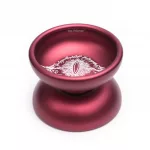
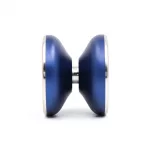
The following story was taken from the Canopy Collection website.
Shortly after we got the Canopy train going, our conversations quickly turned to defining the scope of the project. We were committed to the “Canopy” form factor, which was fundamentally a blend of the Polaris / Weatherman profile with the Otter’s iconic hub design.
In one conversation, the notion of a material study surfaced, and it gave us a unique framing for our design approach. What would the Canopy form factor look like – designed, crafted, and optimized in different materials?
In case you’ve missed an earlier editorial on the design process that began with the Canopy AL, check it out here.
Reincarnating a design in a different material isn’t as straightforward as shoehorning the same blueprint and adjusting it for weight and size, and then slapping a material label on – it’s having to reconstruct the essence of something that exists from the ground up with entirely new parameters, being sensitive to the way different materials transform a user’s physical experience, while prioritizing faithfulness to what has come before.
Specs:
weight 66.6 g
diameter 53.9 mm
width 46.0 mm
Material:
TITANIUM
The Canopy Ti was actually designed alongside the Al – we started sketching them up side-by-side, and the original intention was to prototype and test them together. While the AL sat at 54.9mm in diameter, its titanium brother was scoped at 53.9mm in diameter, by personal request of Harrison – a step closer to the undersized genre, and more akin to the Otter’s profile. The smaller, unassuming footprint was an important requirement – to keep faithful to the ethos of the “everydayness” of Canopy, it had to be something that slipped easily into somebody’s carry.
Welcome to our first prototype – Canopy Ti 1.0.
The result of an early design sprint was the decision to include polycarbonate caps, which could be removed and swapped out for different variations of weight.
This was entirely a moonshot design, influenced by the modularity and utilitarianism of modern outdoor gear, and the intention was to also manufacture compatible caps out of various materials at later stages – even ones made out of oak and maple. The concentric cap design was also influenced by existing Caribou and Atmos designs, in the Beartrap and Fruitloop, but adapted for an industrial, minimalist look. We were excited about how it looked, but as a more complex composite design with a myriad of unknowns, the eventual verdict of the design depended on how it felt in play.
The 1.0 Prototype arrived in my hands, as well as Coleman and Harrison’s, just in time for their West Coast Road Trip (again, not without the requisite drama that seems to follow our adventures with shipping across continents). Fairly quickly, with some testing, we realized 1.0 needed more development. It was too heavy and too clunky in play. The 1.0 has a slight old-school charm that would appeal to players who lean towards undersized, heavy yoyos. We canvassed a list of tweaks we knew would set the design straight, but after some consideration, we eventually agreed we would be perfecting a design that would ultimately be too niche and specific for general release. We needed the Canopy Ti to be universally familiar, comfortable and fitting in any hands.
For what it’s worth – this might not be the end of the 1.0. It’s temporarily shelved, but if inspiration strikes, we just might pull it out of the design archives to get it right for a small-batch release.
Starting with a moonshot design is always fun, and brings with it a ton of learning. Still, our primary course of correction was in aligning more faithfully to the original Canopy form factor, which sadly meant doing away with the caps – at least for our first production version.
We went back to the design table, and sketched up Prototype 2.0. In replacement of the cap-system, Prototype 2.0 featured a similar rim design that makes an appearance on both the Canopy AL and Polaris. Without caps and the seat that enclosed it, the base structure of the Canopy Ti was significantly lighter. While we reapportioned most of that mass in its angled, dipped rim, we ultimately reduced its overall mass, with the prototype eventually weighing north of 64g.
A month or so later, the 2.0 prototype arrived in our hands. It was a marked difference from 1.0 – it felt significantly more agile and maneuverable, but ultimately it still felt shy of what we had imagined. It was a touch too light – but not the desirable sort of litheness that good featherweight designs have. It gave us the same feeling we had with the first Canopy AL prototype – it just didn’t feel full and whole.
From Switzerland, where he was at the time, Harrison wrote in with his thoughts,
We were learning a ton about the Canopy AL together in real time. Feedback clustered around the consensus that the first prototype was enormous fun. The key attributes that most players loved about the prototype were its agility, stability and a floaty touch. Steve wrote in saying he found the prototype delightful and a joy to play; zippy, but not uncontrollably so, and felt lovely in the hand.
We quickly adjusted the design file for a third prototype that had more weight in the midzone and rims, and sent it for yet another round of proofing. Unfortunately, while those changes fixed the issue of playfeel, we ran into more technical issues on the machining front, which made it difficult to machine a large batch of smooth Canopy Tis.
By this time, it had been months since we first sketched up prototype 1.0 – and it had already undergone a transformation so significant, they were night-and-day from the first sketch. We were close – but we needed one final go to get it just right.
We took another few weeks of close study, comparing the CAD files of previous designs and tapping on to learnings and technical notes from years past – and finally submitted a blueprint for Prototype 4.0 – our fourth, and final iteration of the Canopy Ti.
It sported major adjustments in the weight distribution and material reinforcements in crucial areas – tweaks that drew heavily from experimentation that we did with the Polaris. The Polaris was a natural reference here, since the Canopy draws from it as a design inspiration. This version clocked in at 66.6g – but in motion it feels a lot lighter than that. In play it feels closer to a 65g yoyo.
It’s fluid, incredibly agile, and paces very well. It’s comfortable in the hand, plays easy, but its minimalist looks hide an incredibly functional and utilitarian design.
On the production version, Harrison wrote,
The Canopy Ti doesn’t take itself too seriously, but excels when you need it to.
We’re very proud to bring you the Canopy Ti – a design we’ve worked incredibly hard to perfect, and one that belongs in every player’s rotation.
The following story was taken from the Canopy Collection website.
Some time in October last year, Coleman and Harrison met up in Seattle to hang out and to work on the sixth chapter of We Got This – a video series that stories a friendship that has spanned 13 years. Out of one of the many conversations between Coleman and Harrison came the seed idea of a collaboration between Atmos Projects and Caribou Lodge – a prospect that was incredibly thrilling, as Caribou Lodge has been a company we’ve long admired.
There were more conversations to be had before Atmos Projects x Caribou Lodge 2024 was a sure thing, but there it was – the beginning of a new, exciting, and slightly unfamiliar journey.
Weeks in, as the collaboration between both sides started being officially on the cards, I was introduced to Harrison over a Zoom call. First meetings discussing an ambitious project can sometimes be chaotic – in the best of ways. You’re trying to reach for the highest possible ceiling while simultaneously establishing a realistic floor you can execute on. One of the first questions we were trying to address was what project concept would make any sense for both brands. We could sketch up any model we wanted, even do a reinterpretation of our most popular models to date, possibly for maximum effect – but it felt like the most crucial thing to everyone on that call was making something that would resonate equally in both universes; something that would feel at home for both brands.
Another question that surfaced, perhaps non-verbally, was – how do you make something exceptional? Moreso, a physical product that accounts for nuances of feel and motion – when you’re halfway across the world? It turned out that half of the answer is a hundred late night Zoom calls and Telegram messages across time zones; the other half is developing a shared vocabulary for common references and description.
Specs:
weight 65.3 g
diameter 54.9 mm
width 46.0 mm
Material:
6061 AL
Harrison took lead in representing Caribou Lodge in our discussions, and we found out pretty early on that the three of us shared a love for the outdoors, and an accompanying appreciation for well-designed, thoughtful gear that keeps us safe and comfortable on those adventures. They don’t necessarily optimize for maximal performance, as a serious alpinist might look to do, but they sat in a category of incredibly functional, and utilitarian kit that seemed to fit every occasion with ease. Something you just wanted on every trip, something that felt like a good friend you brought along on adventure, something that just felt good.
Having shared reference and language here was extremely helpful, especially in trying to communicate, in very abstract terms, the “feel” of what Canopy should be.
Earlier, Coleman had commented that Harrison might enjoy the play of our latest titanium release, the Polaris – and so I sent one to him as a gift, and for feedback. Consequently, many of our design conversations surrounded features of the Polaris, as well as the Otter, Harrison’s signature model. The conversations naturally progressed to the possibility of merging certain features of the Polaris with the Otter, with major, intentional adjustments to the way it felt in hand and in play. Having both the Otter and Polaris in hand as common references, we were able to triangulate and zone in on a feel we were looking for. For one, Harrison mentioned the Polaris was a touch heavy for his taste – we settled on designing for something that would feel a lot more even.
Canopy AL prototype, next to my battleworn Polaris
We agreed on 54.9mm diameter and 46.0mm width as base parameters, and mass was to sit roughly in the high-64g range – and started sketching up the blueprint of our very first design, the Canopy AL. We embarked on a crazy design stretch – a period that featured working on CAD blueprints while transiting between flights in Suvarnabhumi Airport in Bangkok, Thailand, hammering out refinements on weight distribution, hoping to get as close to perfect as we could on our initial prototype.
One thing I’ve always admired about Caribou Lodge is the attention to detail. It’s rare for companies to be so comprehensive and integrated in their design language that you can immediately tell a design belongs to them. Wanting to honor the Caribou Lodge heritage in this shared project, part of the design process included a serious study of a handful of Caribou Lodge’s designs and CAD blueprints, and getting a good, concrete sense of design decisions and how they bore out in the way they played. One of the most iconic details of Harrison’s Orca and Otter models was the short, fat half-spike, surrounded by a raised moat that transitioned to a clean cup – a feature that has since become recognizable. Another aspect of Caribou Lodge throws is a signature fullness of feeling on the throw. One wouldn’t describe it as dense, but extremely whole – this playfeel would be something that featured prominently further along the journey. More on this later.
We integrated the iconic hub design of the Otter with the minimalist silhouette and rim structure featured in the Polaris, but scaled it to an appropriate thickness for 6061 aluminum. The profile features subtle step-lines that lead to a fat, angular-overhung rim that contains a deceptive amount of mass – a recipe that’s worked beautifully in the Polaris, as well as the Ekta.
CAD files were promptly shipped off to our machinist, and a batch of prototypes (the same ones that have been floating around, most recently at US Nationals) were completed after some wait.
They were ready for testing all across the West Coast Road Trip that Coleman and Harrison were about to embark on – the prototypes would get to them just on time, but not without some drama. Other prototype units were sent out to the Caribou Lodge and Atmos players internationally, and so we sat back, ready for testing and feedback that would come our way the next few days – and feedback did start pouring in.
We were learning a ton about the Canopy AL together in real time. Feedback clustered around the consensus that the first prototype was enormous fun. The key attributes that most players loved about the prototype were its agility, stability and a floaty touch. Steve wrote in saying he found the prototype delightful and a joy to play; zippy, but not uncontrollably so, and felt lovely in the hand.
While we were in the right ballpark, a single point of improvement emerged amidst the other positive responses – it needed a touch more midweight. It was something that revealed itself only after a fair bit of play – when a player got past a point of saturation.
Days of additional testing confirmed this – players that Coleman and Harrison met on their road trip confirmed that while the first prototype played a treat, there was a desire for an additional smidge of weight – requests ranged from 0.5g-1g. We went back to the CAD and made some tweaks to the design – we threw in some quality of life refinements, but the most crucial change was a redistribution of a touch of mass towards the midzone, placing the revised version at an even 65.3g.
The changes made are visually imperceptible, but the differences in play are very pronounced. The revised version felt more consolidated, and had more presence – in the words of Harrison and Coleman, more “complete”. It felt a touch heavier on the throw at first compared to the first prototype, but after it got up to speed, it moved with the same fluidity, and hummed along with an easy confidence. Apportioning more mass to the midzone eliminated any of the “thinness” that could be felt after some play, and the new playfeel felt just right.
The Canopy AL was never meant to be a “min-max” design by philosophy; it never attempted to optimize in that direction. It ended up feeling capable of competitive performance, but still possessing an organic, homely essence to it. Going back to our early conversations about outdoor gear that just felt right, the Canopy sat in that zone of something you always wanted on hand, something that just felt good – like a good, well-worn Gore-Tex jacket, reliable and useful in every situation.
This is subjective, of course – but I personally felt our second version came a lot closer to the recognisable feel of Caribou Lodge models, which have this slightly old-school solidness and fluidity about them.
The wonderful thing about collaborating with others – what more with amazing, talented, and good people, such as the folk from Caribou Lodge – is the perspective you’d otherwise never have. The journey so far in developing the Canopy AL (and many, many other things we have in store) is such a departure from regular programming – but we’re so proud of how the Canopy AL has turned out, and we’re incredibly excited to share this with you.
The Canopy AL was designed for you. The Canopy ethos, “Everyone’s Covered”, was cleverly articulated by Coleman, and speaks to the connection and everybody-ness of our small, but wonderful, inspiring, and diverse community – we’ve experienced that in some small way working on Canopy Collection. The Canopy AL blends performance and fun, and is a reminder to get up, play, create, and to just go with the flow.
“We have a tendency in wanting to turn everything we see into a yoyo. Some ideas from this tendency are, of course, kind of crazy but some others are kind of cool. One day, having this obsession in mind while looking at a knuckle roller, we asked ourselves our typical initial question: what if…
And here it is the KnuckleYo.
The KnuckleYo pushed our very own limits in creating a knuckle roller that is capable in turning into a yoyo—hmmm we are not sure now if it was the other way around: a yoyo that is capable in turning into a knuckle roller?
The initial challenge we hit right away was the weight and dimensions the KnuckleYo needed to have in other to be functional as a yoyo and as a knuckle roller. We played around with different dimensions, shapes and materials. Some worked perfectly, some just did not such as Titanium. One of prototypes we made out of titanium did not perform the best as a yoyo. The limitations of the dimensions and its density did not play well.
For such reasons, we ended up using only Stainless Steel, Brass and Copper. All of them have similar densities but different enough to have a different weight distribution for each material. In other words, although the weight is the pretty much the same, each material variation has a slightly different weight distribution.
The other challenge we had was in the designing part. We wanted to have thin walls with thick rims but the size of the cup prevented to use standard tooling. This of course led us to work with the machinist and create customized tooling.
The initial idea was to accommodate begleri as part of the features by using a 275 paracord that fit the M4 hole size no problem. It worked perfectly. The problem we had was that the axle was going through the cup side making the yoyo assembly a little bit frustrating. For such reason we ended up adding a stop to prevent the axle to go to the side of the cup, but that reduced the diameter of the ending part of the axle hole. For such reason, a <2mm diameter paracord could do the trick to turn the KnuckleYo in begleri.
For the engine of the yoyo, we did not want to use a mini bearing. We wanted instead to use a a bearing size that had a good performance and that was easy to find out there in the market. At the same time, we wanted the bearing to be concave to some how reduce the friction of the string with the pads. We ended up choosing an A size bearing and customized pads to properly fit the bearing and yoyo dimensions—by the way, our Throw Key (not included) can also remove this bearing if it gets stuck 😉
Playing with a mini yoyo is challenging. This is not the exception but definitely has great stability to perform complex tricks and to improve your yoyo accuracy. One element that definitely is key with this throw is the string, we tested several combinations in terms of materials, length and thickness along with Zipline to find the perfect match that suited the KnuckleYo not only from the performance perspective, but also from the winding up and binding perspectives.When not in yoyo mode, you can toss it in your pocket and start using it as a knuckle roller practically anywhere yo go.
This project made us connecting with different people with different skills to test the prototypes and to receive feedback after testing them. We would like to thank them all for their time and extraordinary response that helped us to develop this project.
“Basilisk lizards are proficient water runners that defy gravity, regularly dashing across bodies of water to evade predators. Studies have shown that static stability during locomotion is possible only when the center of mass remains within a theoretical region of stability. Running across a highly yielding surface could move the center of mass beyond the edges of the region of stability, potentially leading to tripping or falling.
They produce greatest support and propulsive forces that play with their body weight that dynamically stabilize them while running on water.
We wanted to recreate the qualities of this amazing lizard into a yoyo and came up with a very agile but powerful throw made out of 7003 aluminum.
The aluminum used in this throw allowed us to design thinner walls and to bring that weight in key areas to improve performance and stability.
We wanted this yoyo to be capable to perform as many tricks as possible, and just for added fun, we added a fingerspin hub, that in our opinion, is a beauty!
The Basilisk has a stylized V-shape with an almost unoticeable concave feature that brings more comfort to the hand and helps pushing few grams towards the rims.”
Durendal was the sword of Roland, a legendary paladin and leader of the rearguard of Charlemagne’s army. It was one of the four Holy Swords forged through the means of alchemy and magic and was capable of cutting through giant boulders of stone with a single strike.
We were intrigued with this story and it inspired us to create a throw that was powerful and agile and able to perform complex tricks with precision (and maybe bring a bit of magic too to your game).
We decided to design the Durandal with a slightly smaller diameter and width than a regular sized throw while maintaining the feeling and power of a regular sized one. It’s weight and shape were also key to achieve our vision. After several trials, we found that 62.7 gr worked perfectly to hit this throw’s sweet spot– just right for its size, shape and SS rims.
We had a lot of fun designing the Durandal. Although the shape looks like a straight W, the catch zone has a subtle curvature that reduces the chance of friction between the string and the yoyo. That meticulous and precise curvature was exactly what we wanted to exalt in the Durandal’s ability to perform. It maintains its balance and power when in the air and lands with incredible stability and momentum, ready for your next trick.
The colourways we chose for the Durendal will transport you back to medieval times where the great knights, wizards and paladins fought to bring back freedom to the people– Our hope is that the Durandal brings that same inspiration to you as you throw.“