CompanyYo-yo BrandEst. 1930–1981
Lumar
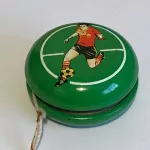
Lumar was the British yo-yo brand of Louis Marx and Company, the American toy mogul who built one of the world’s largest toy empires from the 1920s onward. Marx began manufacturing tin yo-yos in England under the Lumar name around 1930, operating first from Dudley before establishing a factory in Swansea, Wales by the late 1940s. The name “Lumar” was a contraction of Louis Marx’s own name, used exclusively for his British market toy lines, which also included tin trains, vehicles, and toy gramophones.
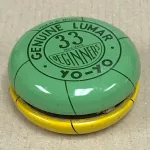
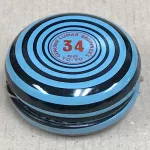
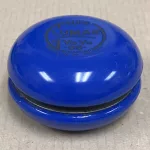
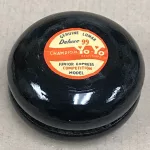
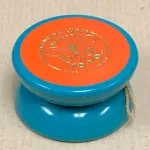
A private arrangement between Louis Marx and his friend Donald Duncan shaped Lumar’s market for decades: in exchange for Marx keeping Lumar out of the American yo-yo trade, Duncan paid Marx a commission on his New York-area sales. The gentleman’s agreement left Lumar as the definitive British yo-yo brand through the postwar era. Over the 1950s through 1970s the line moved from all-tin construction into wooden and plastic models, producing a full range from beginner-grade models to competition-branded “Championship 99” yo-yos, as well as licensed character yo-yos (The Wombles, The Muppet Show) and specialty variants including a Whistling Yo-yo and butterfly-shaped models.
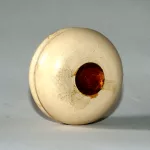
In 1967 Dunbee-Combex acquired both Louis Marx and Co. Ltd. and Lumar Ltd. as part of a consolidation of the Marx UK operations; after Quaker Oats divested the US Marx division in 1976 the Swansea factory continued under new ownership until financial losses forced its permanent closure in 1981. Lumar yo-yos are now sought-after British vintage collectibles, with early tin Beginners models and the single surviving Jewel 99 prototype — found in the shuttered Swansea factory by a collector — among the most prized examples.