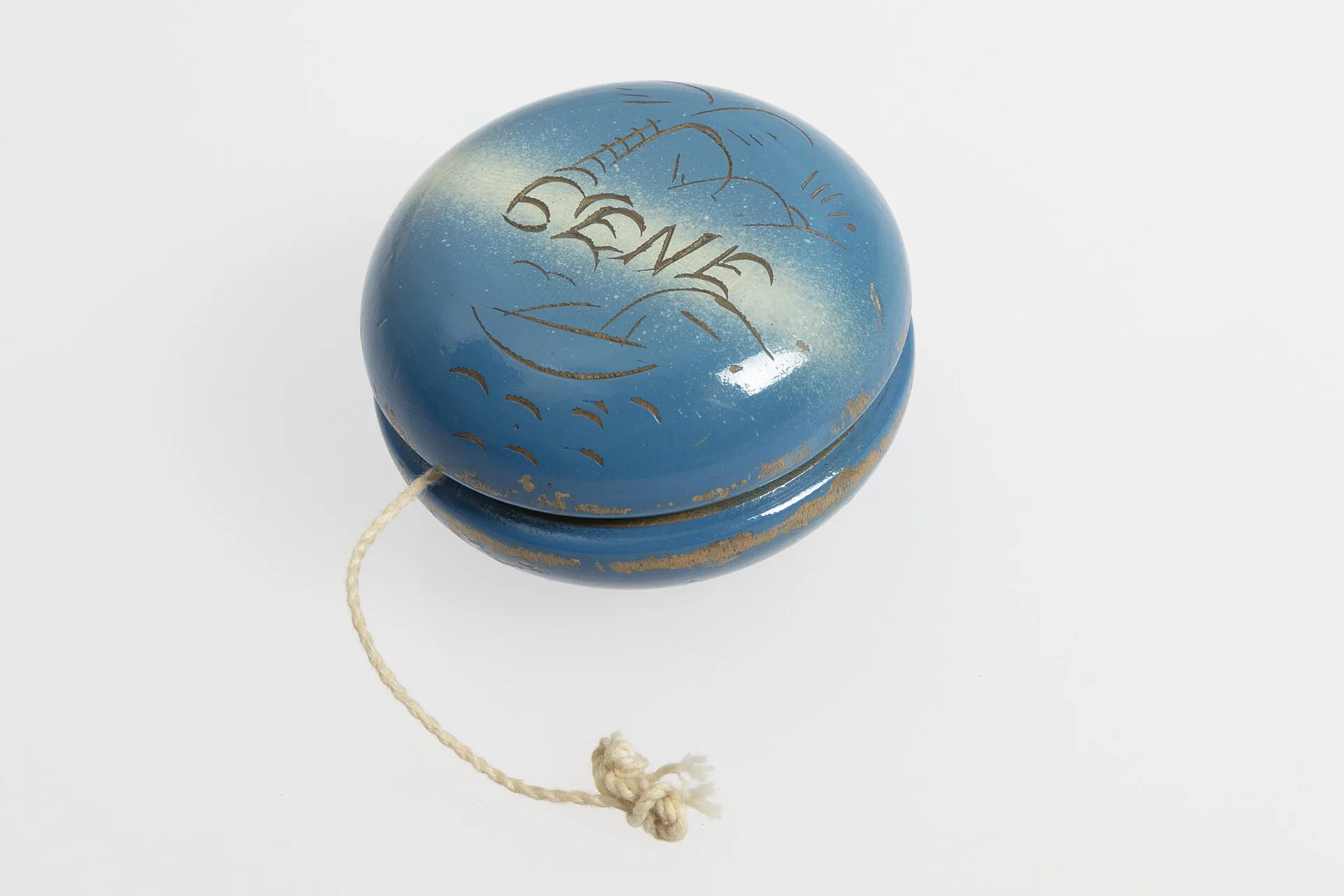
A worn rim tells you a yo-yo was played. It cannot tell you who played it, where they learned, or why they kept it for thirty years.
Those answers might be on the back of a photograph. They might be in a contest flyer, a handwritten note tucked into a box, or the memory of the person who gave you the yo-yo. When an object changes hands without that information, the next owner has to start guessing.
For collectors, preserving yo-yo history starts with keeping those connections intact.
The players who sold the spin
The early American yo-yo business depended on people showing other people how to play.
According to the Smithsonian’s Yo-Yo History in America, Pedro Flores had secured financing, established a company, and manufactured more than 100,000 wooden yo-yos by early 1929. He hired skilled players to demonstrate tricks, recognizing that customers needed to see what the toy could do.
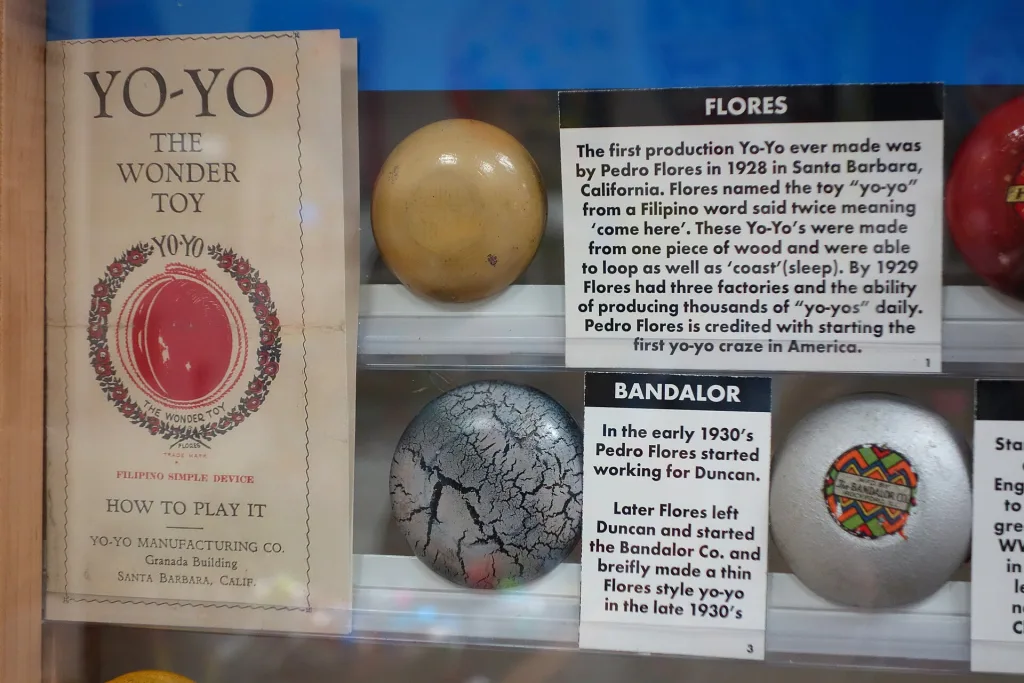
Donald F. Duncan Sr. bought initial rights from Flores and, by October 1932, had secured the remaining assets, including the trademark. Duncan expanded promotion through traveling demonstrators and newspaper partnerships. Some contests required entrants to sell newspaper subscriptions.
That history gives a collector several kinds of evidence to look for. A yo-yo records the product. A flyer may identify a contest or its sponsor. A photograph may show a demonstrator at work and the people who gathered to watch.
Keep the caption with the photograph. If someone recognizes a player, ask for their name and how they know them. Record where the picture was taken and whether its date comes from a printed caption, a dated document, or someone’s recollection. Each answer gives a future researcher something to check.
A design has a history, too
Two Tom Kuhn models show why a collection record needs more than a name and color.
The wooden No Jive 3-in-1, patented in 1978, could be taken apart and reconfigured by reversing its halves. Classic, Butterfly, and Pagoda arrangements offered different shapes using the same components.
The aluminum Silver Bullet 2, released in 1990, paired a ball-bearing axle with an adjustable gap. Its construction gave players control over the setup and makes it a useful model to study in the development of bearing yo-yos.
An exterior photograph can miss changes to either model. A replacement axle sleeve, swapped bearing, or altered response may affect how a particular example plays without being obvious in a side view.
Record the setup you actually have. If you change a part, keep a note of what came out and what went in. When the original part is available, label it and keep it with the record.
A model’s introduction or patent date also needs to be distinguished from the manufacture date of your example. Identifying a model associated with 1978 does not establish that every surviving example was made that year.
Before the box is lost
Packaging is easy to separate from a collection. It takes up space, and a display shelf usually has room for the yo-yo alone. Before anything is discarded or stored elsewhere, photograph the box and everything that came inside it.
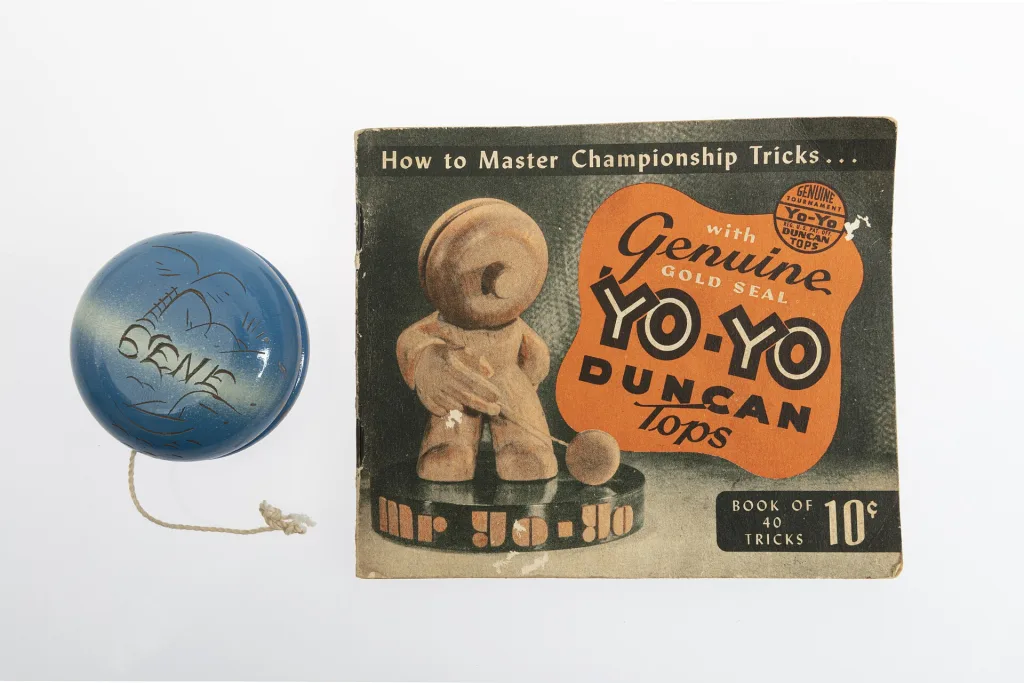
Instructions, inserts, price stickers, spare parts, and handwritten notes may help identify a version or explain where it was sold. Capture both sides of the yo-yo, its profile, and any markings. Include a ruler when size is relevant, and keep the original image files.
Write down how you acquired it. A receipt or saved listing can support a date; a seller’s description records what the seller claimed. Keep that distinction clear. A remembered purchase date should be labeled as remembered, and an estimated production date should remain an estimate.
This is especially useful when accounts conflict. Keep the competing dates and their sources instead of choosing one without explanation. Someone may later find the catalog, advertisement, or photograph that resolves the question.
Start with one throw
You do not need to document an entire collection at once. Choose one yo-yo and make a record that includes:
- Maker and model, with any uncertainty noted.
- Color, markings, and distinguishing details.
- Production or release date, and the evidence for it.
- Who supplied it, when you acquired it, and any saved listing or receipt.
- Axle, bearing, response, and known modifications.
- Its story, including who told you that story.
Give the record and its photographs a matching name or number so they can be found together. Keep a backup of the digital files. If the yo-yo is sold or given away, pass a copy of the record to its next owner.
For a personal history, a few questions can open the conversation: Who taught you? Where did you learn? What was your first yo-yo? Ask permission before sharing someone’s account publicly, and let them check names and dates when possible.
The Yoyo Archive welcomes photographs, catalogs, instruction sheets, stories, and corrections. Send the names, dates, sources, and sharing permissions you have. If a detail is unknown, say so. An incomplete record with clear gaps gives us something we can work with.
Adapted from The Yoyo Archive Zine, Vol. 5: Keep the History.